
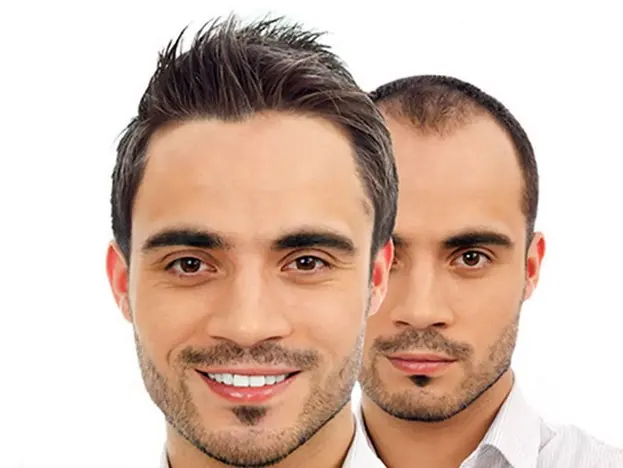
Our appearance is determined and noticed first of all by our hair; we have hair in different lengths, colours and shapes. As long as our hair looks good, we feel young and energetic.
On average, 100-150 hairs are shed every day and new ones grow in. As long as the hair roots keep functioning well, new hairs will appear again and again instead of the hair falling out. In men and women there is such a balance between hair loss and regrowth. When this balance between the shedding and regrowth process is disturbed, the hair first becomes thin and then baldness appears. For this reason it is very important to know what the balance between shedding and regrowth is and which factors disturb it.
Hair loss that is called male-pattern is the most common form of permanent hair loss, in men and women alike.
What is a hair transplant?
A hair transplant is simply the relocation of hair follicles from the ring of hair (the donor area) to the desired recipient area. These follicles are taken from this area because the hair that grows here is resistant to hair loss. Even if someone goes completely bald, a ring of hair always remains. This is always determined by a preliminary examination by the specialist.
HAIR TRANSPLANT METHODS:
There are 2 hair transplant methods
- FUE method, Follicular Unit Extraction (newest technique)
- FUT, Follicular Unit Transplantation (classic technique)
FUE method (Follicular Unit Extraction)
With the FUE method, hair follicles can be taken not only from the back of the head but from anywhere on the body and the head.
Is the FUE method painful?
This method involves no incisions or stitches. For this reason, the FUE hair transplant technique is not painful.
Where is the hair taken from?
With the FUE hair transplant method, it is possible to obtain hair roots from anywhere on the body.
How is a hair transplant performed?
Another advantage of the FUE method is that no piece of skin needs to be removed and the stem cells can be applied individually. With the FUE hair transplant method, local anaesthesia is used to numb the areas that have been identified as the source. Once the anaesthetic has been given, the 1.1 mm hair follicles are separated one by one using a slightly smaller instrument. The separated follicles are kept in a special fluid so that they stay healthy until the hair implantation begins. Under the microscope, using specially designed micro-needles, only follicular hair units are removed.
The holes in which the follicles are placed are smaller than with conventional hair transplantation. The hair can be planted more densely: 30-50 hair roots.
In many cases, hair root planting has to be done every other day.
Once the harvesting has been completed, the planting area can be prepared. With the FUT method, local anaesthesia is given beforehand, then faint incisions are made in the shaped area and the hair follicles are transferred individually according to the drawn design.
It is more intensive, and after the planting the result is more aesthetic than with classic techniques.
Will you have swelling after a hair transplant?
To prevent swelling around your eyes, it is recommended that you massage your forehead twice a day.
It is recommended not to use blood-thinning medication for ten days before your treatment.
Do not use aspirin or other blood-thinning medication during the first two days after the treatment. Consult a doctor about stopping blood-thinning medication.
Patients who have diabetes or heart problems must report this to the doctor concerned, as otherwise there is a high risk of heavy bleeding.
Patients who have diabetes or heart problems can of course undergo a hair transplant, but if the doctor concerned knows about your conditions, he or she can take measures during the operation.
After the operation you will be given a special band. This band must be worn, following the recommendations of the practitioner, to prevent swelling.
To prevent swelling, it is recommended to drink plenty of water and to take painkillers, so as to prevent infection.
Does a hair transplant have disadvantages?
So far, no disadvantages of a hair transplant have been found. After the operation, of course, the doctor’s advice must be followed and the medication must be taken.
How long does it take before my hair grows?
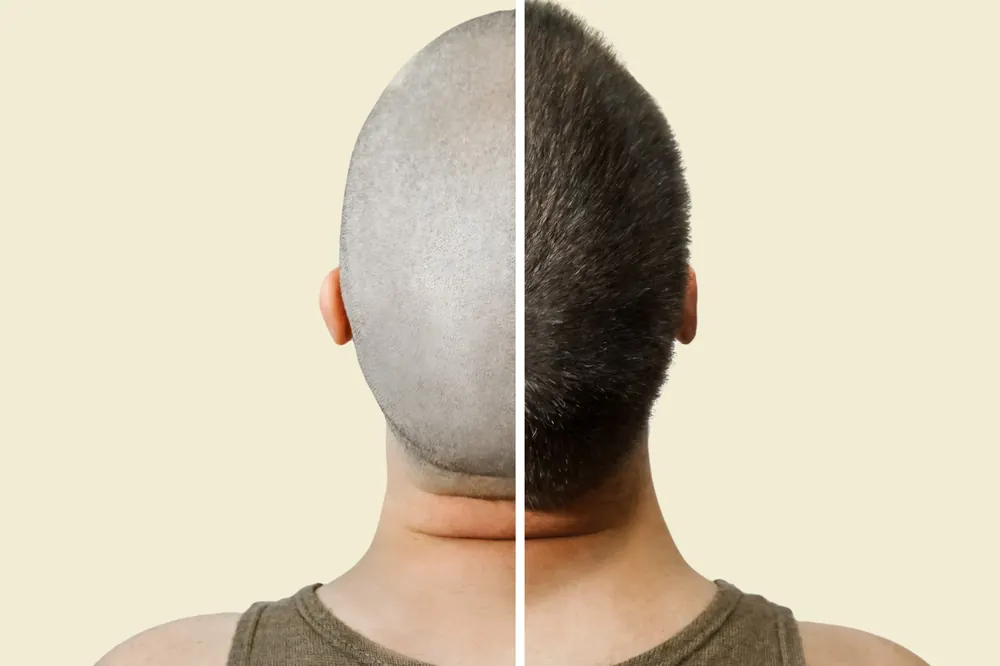
After a hair transplant, the patient receives a special product that he or she uses every evening when washing the hair. The hair is washed within two to five days. After ten days the grafts emerge, and after a while some of them fall out; after this, you just have to wait. After 12 months you can see the exact result.
Hair transplant methods:
In the FUT (Follicular Unit Transplantation) hair transplant method, hair roots from the nape of the neck are moved to the recipient area; these hair roots are part of the so-called permanent hair from the ring of hair between the patient’s ears. With this method, the hairy area between the ears is shaved. A piece of skin bearing a number of hairs is removed from there after local anaesthesia with sedation, and stitches are applied. (This suture line is about 1 mm wide and 10 cm long, a thin line. This line is already hidden by hair. If you shave off your hair for any reason, it may look like a thin line.)
The hair-bearing skin that has been taken is separated one by one under a microscope or magnifying lens and stored in a special solution. Later, the sites where the hair will be added are made with very small incisions, and these hairs are placed at these marks. The more precisely these incisions are opened, the better the result will be. Large incisions leave a mark on the spot, while small incisions cause acne-like bumps. Every hair transplant absolutely requires experience and care. Every transplant carried out produces an individual end result. These incisions used to be made with a laser. Using a laser in this process is also better where possible, and it is recognised that laser application gives natural results (because the laser burns the opening that houses the hair follicle, which delays healing); laser planting is in use today. After planting, only low-density hair is treated, with various laser treatments. With the FUT method, the grafts (hairs from one excised piece) that are needed are planned on the basis of the quantity and density of the patient’s healthy hair. On average, a graft contains 2 to 5 hairs per follicle, but this differs from person to person.
In some cases this method can be made more natural by adding the FUE method (Follicular Unit Extraction).
Hair transplantation using the FUE method (Follicular Unit Extraction)
This method, described in the years just before 2000, has the following advantages:
Under the microscope, using specially designed micro-needles, only follicular hair units are removed.
The holes in which the follicles are placed are smaller than with conventional hair transplantation. The hair can be planted more densely: 30-50 hair roots.
Hair follicles can be taken not only from the back of the head but from anywhere on the body and the head.
This method involves no incisions or stitches.
In many cases, hair root planting has to be done every other day.
It is more intensive, and after the planting the result is more aesthetic than with classic techniques. The disadvantage is that the sessions take longer than with classic techniques.
With the FUE hair transplant method, it is possible to obtain hair roots from anywhere on the body.
Another advantage of the FUE method is that no piece of skin needs to be removed and the stem cells can be applied individually. With the FUE hair transplant method, local anaesthesia is used to numb the areas that have been identified as the source. Once the anaesthetic has been given, the 1.1 mm hair follicles are separated one by one using a slightly smaller instrument. The separated follicles are kept in a special fluid so that they stay healthy until the hair implantation begins. Once the harvesting has been completed, the planting area can be prepared. With the FUT method, local anaesthesia is given beforehand, then faint incisions are made in the shaped area and the hair follicles are transferred individually according to the drawn design.
Points to consider during a hair transplant
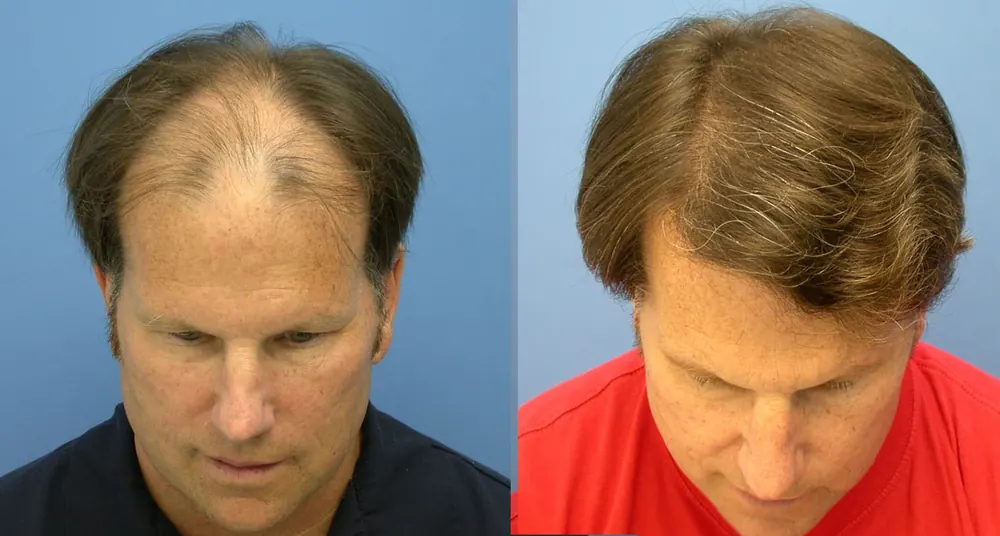
Even the slightest careless handling when the hair is removed and transferred to the bald area, while the root is being taken, affects the final result. Careful handling, for example, prevents damage to the root while the hair root is being taken, and if the incisions in which the hair roots will be placed at the same time are not made properly, the naturalness of their spacing, depth and direction is affected. In summary, the permanent result and natural look of every transplant depend greatly on this. The care shown during a hair transplant is just as important as the number of roots implanted. While 4,000 carefully transplanted follicles can all survive, even 5,000 incorrectly placed hairs might not see even 100 survive as hair-bearing roots.
How can hair loss and baldness be treated?
Laser treatments that affect hair lengthening, lotions that increase blood circulation and certain medicines are the most effective hair restoration methods in terms of permanent and natural results. The use of laser and medicines is seen as an aid in speeding up the outcome after a hair transplant.
In recent years, intensive studies have been carried out on hair cloning (reproduction), and clones have been obtained. It seems possible that in the near future this lack of hair can be solved.
Is a hair transplant permanent?
Hair roots that are taken from the nape and planted do not fall out in a way that causes baldness, unlike your other hair roots, because of differences in their genetic make-up.
Today, one in 3 men and one in 5 women have problems with their hair. Hair loss causes psychological and social problems. Under current circumstances, it is not possible to bring hair back to areas where it has been shed, has thinned or is absent for various reasons. The only solution is a hair transplant.
You can also come to us for eyebrow, moustache and beard transplants!
PRP treatment
PRP is a hair-improvement treatment. With this treatment, hair loss is slowed down or stopped altogether. Your hair roots are strengthened and your hair grows thicker and healthier.
PRP treatment is also used before or after a hair transplant to achieve a better result.
During the treatment, your hair does not need to be shaved or cut. You can continue with your daily life straight after this treatment, so there is no recovery time involved. There are, however, a few points you need to take into account in order to achieve the desired result. Your practitioner will discuss these points with you.
Hair mesotherapy
The chance of success of mesotherapy for hair loss is more than 90%. Mesotherapy delivers exactly the right nutrients to the place where they are needed (around the hair follicles). The harmful substances that block the hair stem cell are neutralised. The beneficial substances stimulate the hair stem cell to recover and regenerate. The metabolism in the hair stem cell is strengthened. Blood circulation is stimulated and protein synthesis (including collagen) is promoted.
Mesotherapy treatment stimulates new hair growth and also reduces hair loss.
Would you like more information about hair transplants and hair transplant methods? Please contact us, without obligation, by e-mail, via our contact form or by telephone: +31 634147027
Best result – Honest prices – Good quality - Great aftercare.
This information is general and does not replace medical advice. Every patient is assessed individually: after a detailed conversation it is determined whether a treatment is suitable for you.