

There are different types of diabetes. The best known are type 1 diabetes and type 2 diabetes. With diabetes (sugar disease), the body can no longer regulate the blood sugar level. In healthy people this process works well, with the help of the hormone insulin. Both types involve insulin and blood sugar, but they work differently. Type 2 diabetes is the most common.
Type 2 diabetes
With type 2 diabetes, the body produces too little insulin and no longer responds properly to insulin. Insulin is a hormone that plays an important role in keeping the blood glucose level under control. High blood sugar can lead to complications such as cardiovascular disease, kidney disease, fat metabolism disorders and poor eyesight. People with type 2 diabetes usually receive medication and advice on diet and exercise, and sometimes also have to inject insulin. It is very common: 9 out of 10 people with diabetes have type 2. The risk is higher with overweight and little exercise, and at older ages, as well as with a hereditary predisposition. Type 2 diabetes used to be called ‘adult-onset diabetes’.
Type 1 diabetes
The body of people with type 1 diabetes no longer produces any insulin at all. This is because the immune system mistakenly destroys the cells that produce insulin. Therefore, people with type 1 diabetes have to inject insulin several times a day or wear an insulin pump.
Type 1 diabetes used to be called ‘juvenile diabetes’. This form of diabetes is much less common, occurring in 1 in 10 people.
METABOLIC SURGERY
What is Metabolic Surgery?
These operations aim to regulate hormonal and metabolic diseases. Operations aimed at treating type 2 diabetes, one of the metabolic diseases, are called diabetes surgery. Obesity is actually a metabolic disease, so every obesity operation is in fact a metabolic operation. A new treatment for type 2 diabetes without injecting insulin.
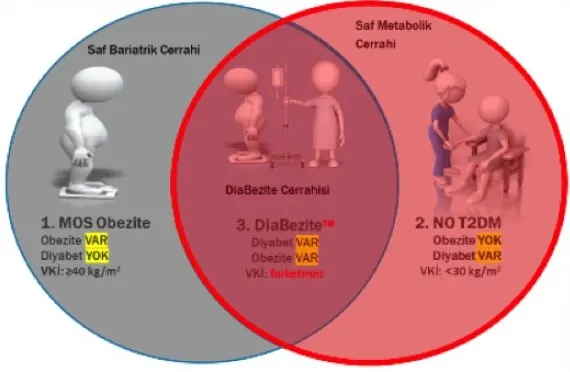
According to current common practice, patients are roughly divided into three groups:
- Obese patients without metabolic problems
- Non-obese patients with metabolic problems
- Patients with both obesity and metabolic problems (patients in this group can be called metabesity patients)
For patients in the first group, those who only have obesity without metabolic problems, the operations are called bariatric surgery or obesity surgery. The aim here is to lose weight.
For patients in the second group, those with metabolic problems (type 2 diabetes, fat metabolism disorders, high blood pressure, etc.), the operations are called metabolic surgery. The aim of these operations is not to lose weight, but to correct the metabolic problem. An operation on a patient with type 2 diabetes who does not have morbid obesity (severe overweight) is called metabolic surgery or diabetes surgery.
Patients in the third group have both obesity and metabolic diseases (metabesity patients). The operations in this group are aimed at correcting both obesity and metabolic problems. However, they are intended to improve the metabolic status of patients. For this reason, it is more appropriate to call the operations performed in this group metabolic surgery. For example, if a patient has both obesity and type 2 diabetes, these patients are called diabetes patients and the operation is called diabetes surgery.
N.B. Bariatric and obesity surgery refers to operations aimed at losing weight, whereas metabolic surgery, diabetic surgery, diabetes operations or diabetes surgery refer to operations aimed at correcting diabetes.
Would you like to know more about diabetes, and whether you are eligible for diabetes surgery? Please feel free to contact us, without obligation, by e-mail, via our contact form or by phone: +31 634147027. We will be happy to help you further.
This information is general and does not replace medical advice. Every patient is assessed individually: after a detailed conversation it is determined whether a treatment is suitable for you.